
Decks, stairs & outdoor timber
Deck oiling before summer: re-oil, restain, or sand back first?
Most decks around here go grey a year or two before anyone notices. A quick check now tells you whether yours needs a fresh coat, a proper clean, or sanding back before the summer barbecues start.
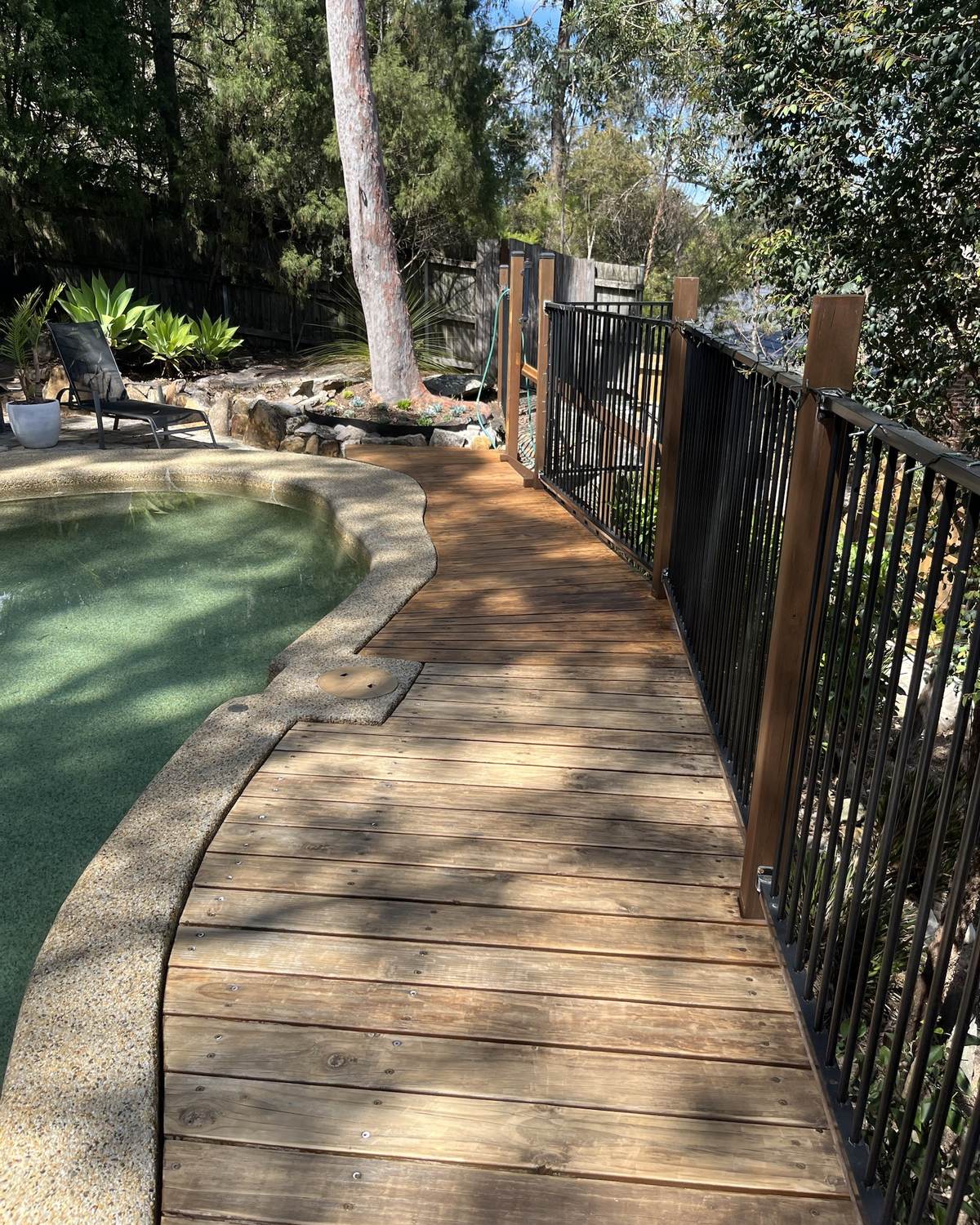 Before
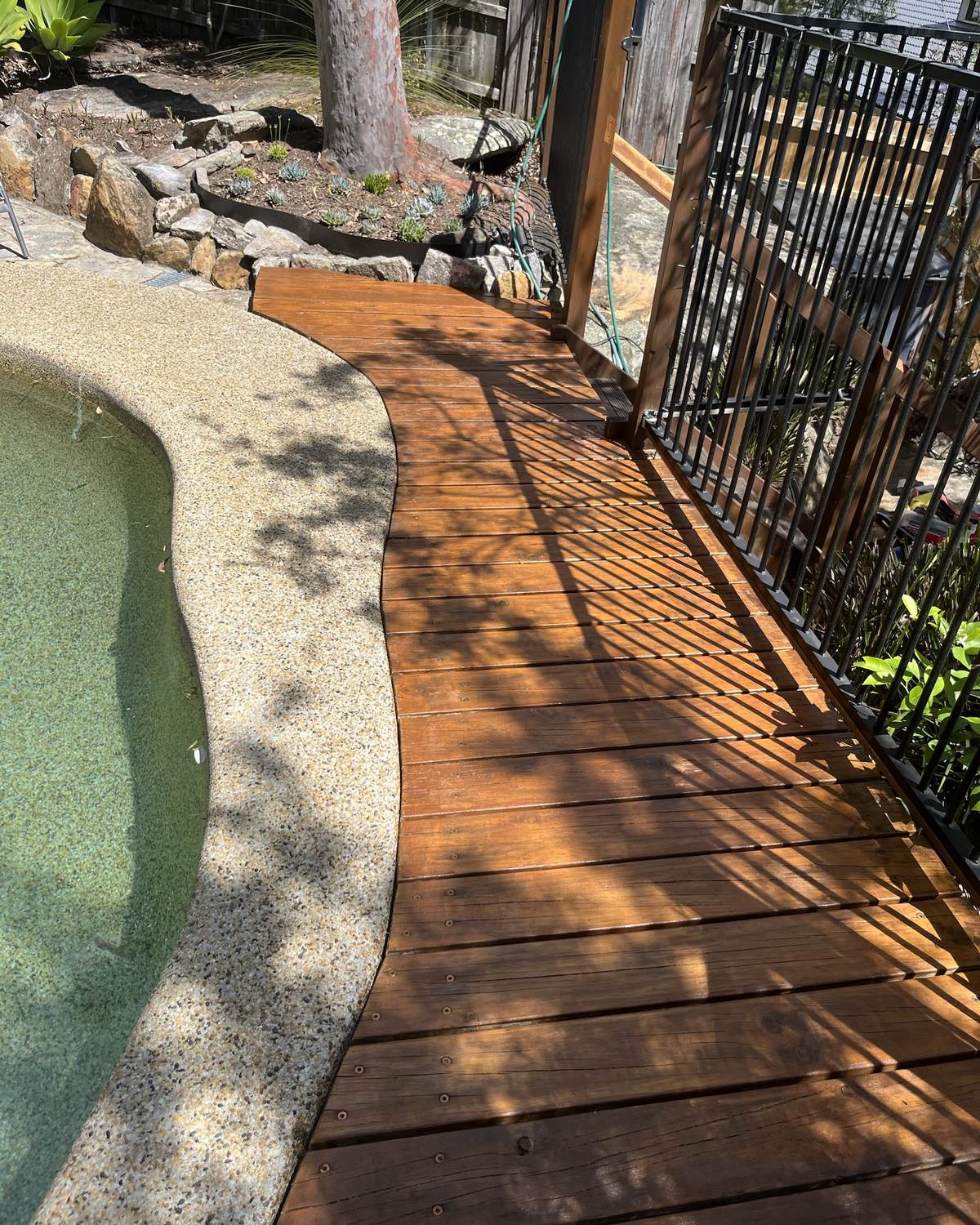 After
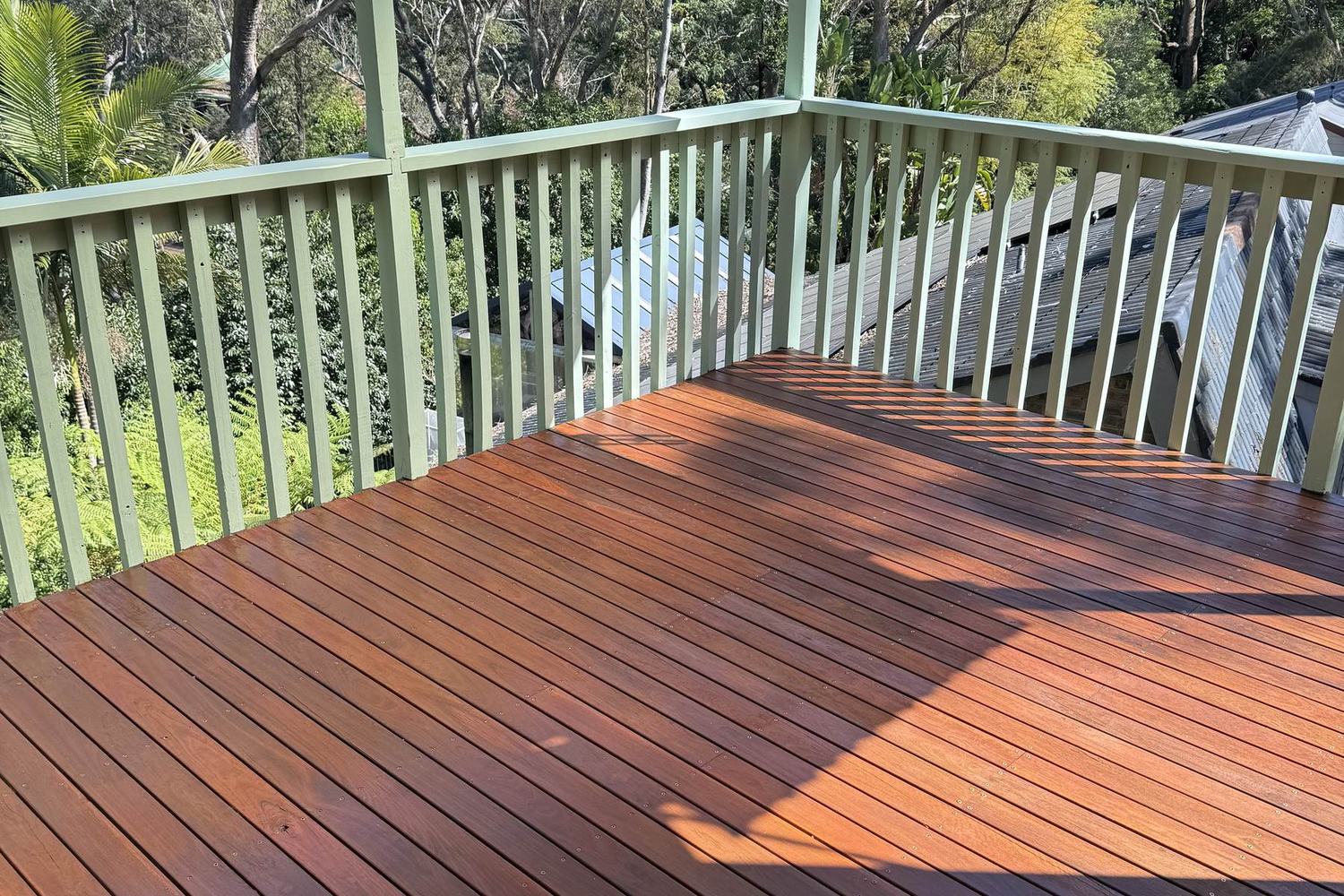
A pool deck in Mount Colah: faded boards sanded back and restained to an even finish. More before & afters.
Why decks go grey up here
A deck oil or stain does two jobs: it keeps water out of the timber and it blocks the sun. On the Upper North Shore, decks get hit from both sides.
- Sun. North and west-facing decks lose their finish fastest. UV breaks down the coating, then the top layer of timber, and that's the silvery grey you see.
- Gum leaves. Leaves sitting on boards hold moisture and leave dark tannin stains, especially in the gaps.
- Shade and damp. Decks under big trees, or close to a sandstone wall, stay wet for longer. That's when you get mould, a slippery surface, and eventually soft board ends.
Grey timber isn't rotten timber. It's the surface wearing, and it can nearly always be brought back. But a deck left grey for years soaks up every bit of rain, and that's what leads to cupping, splitting and rot.
The water drop test
This takes thirty seconds and tells you more than looking at the colour.
- Tip a little water on the boards in the sunniest spot, and again in the most-used spot (usually the top of the stairs or outside the back door).
- Watch it for a minute.
Water beads up: the finish is still working. A good clean is enough for now.
Water soaks in and darkens the timber: it's time for a fresh coat before summer.
Re-oil, restain or sand back?
What the deck needs depends on how far the finish has gone, not how old it is.
Clean and re-oil
Still has colour, just looks dull or dry. Water soaks in, but the boards are smooth.
- Deck cleaner and a stiff broom
- Let it dry fully, usually a day or two
- One or two thin coats of the same product as last time
Sand back and restain
Grey and patchy, rough or furry to touch, or an old coating that's peeling or flaking.
- Sand back to clean, bare timber
- Fill or replace any split or soft boards
- Stain or oil in even coats, board by board
Avoid putting fresh oil over a flaky old coating. It can't soak into the timber underneath and tends to peel again within months. The pool deck in these photos was sanded right back to bare timber before it was restained.
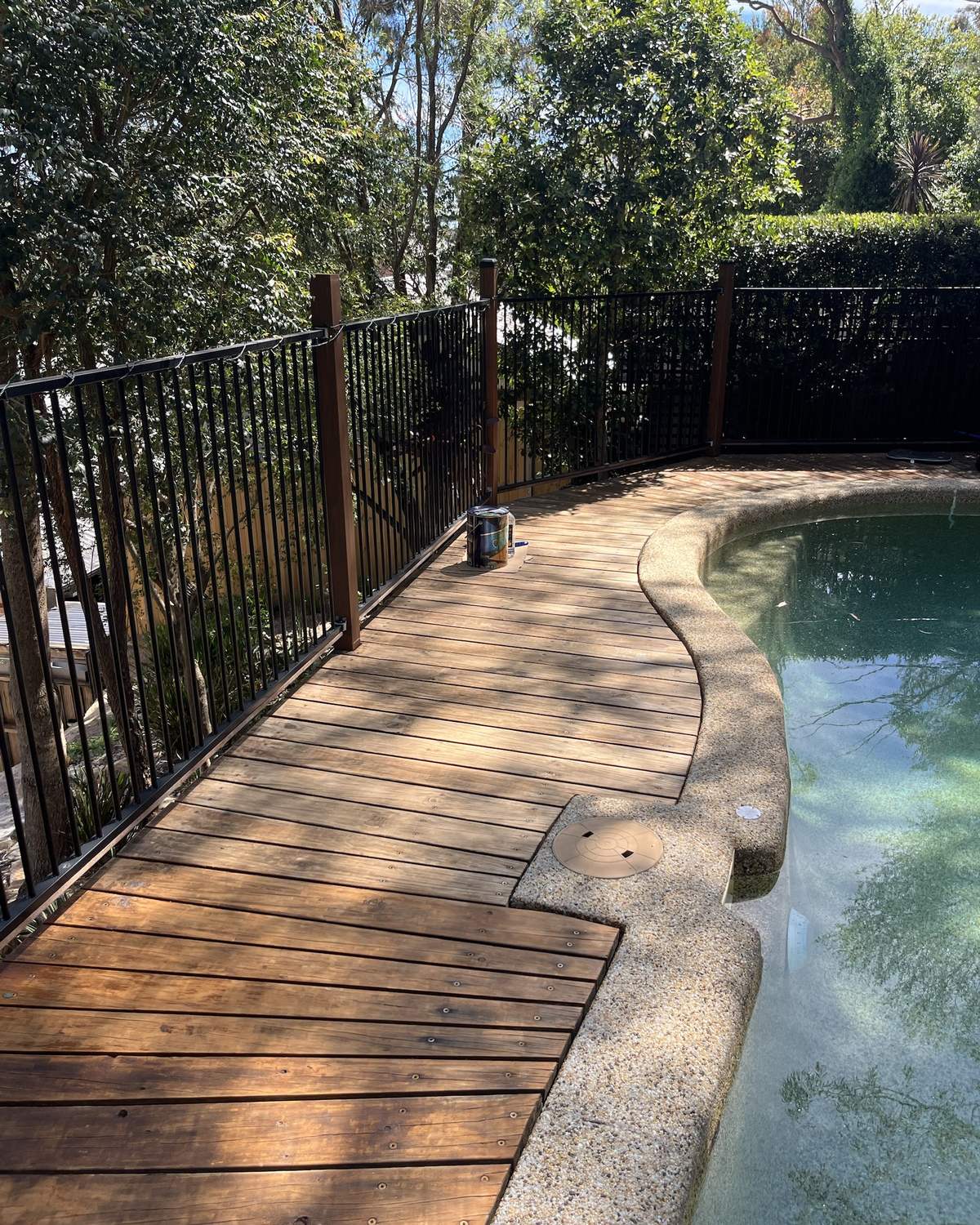 Before
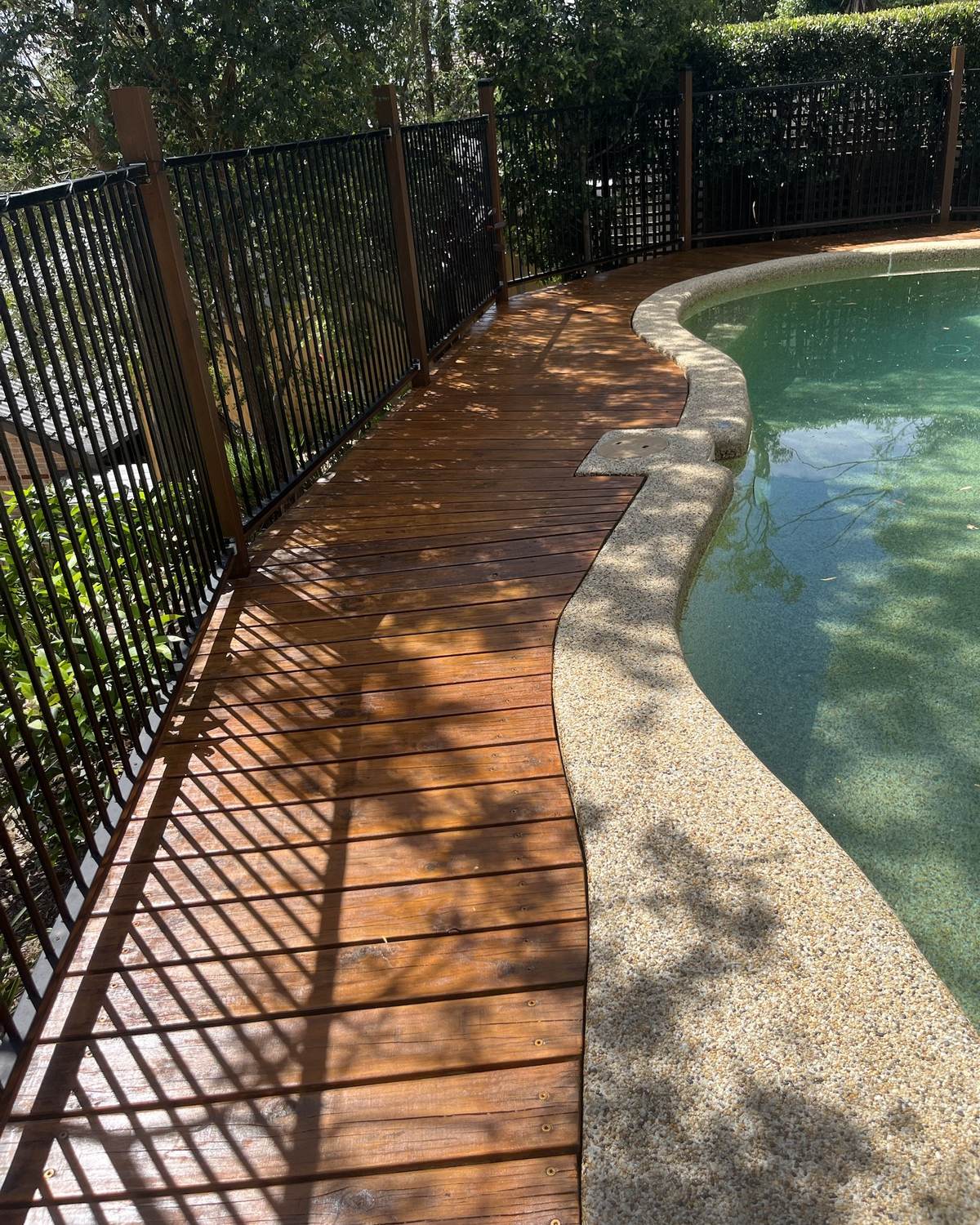 After
The full curve of the deck, sanded and restained right up to the pool edge.
A few things that make the finish last
- Pick the weather. Don't coat in hot midday sun or with rain due in the next day. Mornings in late spring are ideal.
- Thin coats beat thick ones. Wipe off anything still sitting on the surface after a few minutes, or it turns sticky.
- Do the end grain. Board ends soak up the most water and rot first. Give them an extra coat.
- Plan a top-up. As a rough guide, a deck in full sun usually needs another coat every year. Shaded decks can go longer. The water drop test tells you when.
Pool decks and stairs need extra care
Pool decks get splashed and walked on with wet feet, so a couple of extra things matter.
- Grip matters more than shine. A glossy finish looks great but gets slippery when wet. On pool decks and stair treads, a penetrating oil or a finish with a non-slip additive is the safer choice.
- Work around the pool fence. The fence, gate and latch have to stay compliant the whole time. Nothing gets removed or propped open while the deck is being done.
- Stairs and handrails get the same finish. Stairs, landings and rails are usually the most weathered timber on the property. Doing them at the same time as the deck means everything matches.
Check the boards and rails while you're there
Sanding a deck means getting down close to every board, which is the best time to fix the small stuff:
- Nails that have popped up, or loose screws
- Split or cupped boards
- Loose balusters or a wobbly top rail
- Soft board ends, especially near the house, under pot plants, or wherever leaves pile up
If a board end feels spongy when you press it with a screwdriver, read how to spot timber rot in outdoor stairs and decks before any oil goes on. Oil over rot just hides it.
When it's a builder's job
Most sanding, oiling and board repairs are a straightforward handyman job. A few things need a licensed builder instead, and James will tell you so:
- The deck sags, bounces or moves when you walk on it
- Rot in the bearers, joists or posts, not just the boards
- Decks well off the ground, where the frame or balustrade needs rebuilding
- Signs of termites (mud tunnels, hollow-sounding timber). Get a pest inspection first.
Not sure what your deck needs?
Text James one wide photo of the deck and a close-up of the worst boards. That's usually enough to say whether it's a clean-and-oil or a sand-back. James works from Pymble to Cowan, including Hornsby, Wahroonga, Turramurra, Mount Colah and Berowra.
More from James: Timber rot in outdoor stairs and decks · LED downlights, dimmers and USB power points · All articles